
Tag Archives: portosystemic shunt
An update on the prophylactic use of peri-operative levetiracetam in dogs undergoing portosystemic shunt attentuation
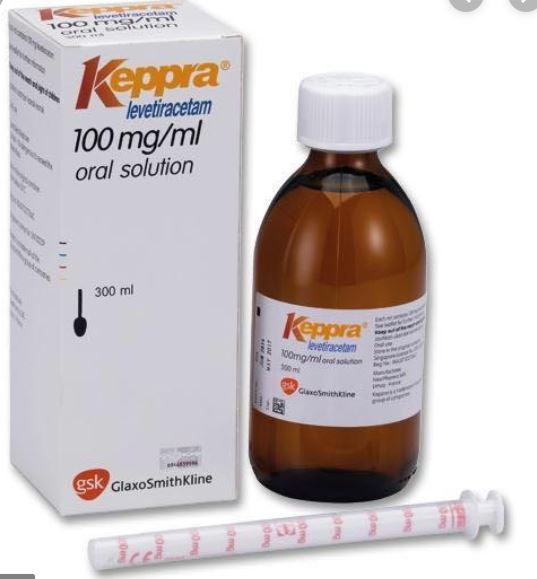
This is an interesting snippet of recently-published information from Utrecht which I hadn’t seen until today: https://dspace.library.uu.nl/handle/1874/362993 ‘Postligation seizure syndrome (PLS) is described in 5-18% of the dogs postoperative to ligating the extrahepatic shunt and is mostly seen within 72 hours after surgery(1). Scientific literature claims a preventative effect of a preoperative treatment with levetiracetam, … Continue reading
Normal bile acid stimulation test results in two dogs with (presumed congenital) extra-hepatic portosystemic shunts
Although this may not be a big surprise I can’t find any published accounts specifically documenting this phenomenon. The first case involves a 5 year-old MN Shih-tsu presented on account of haematuria. There was no history of preceding signs suggesting hepatic encephalopathy. No urinary abnormalities were identified on abdominal ultrasound. However, an extra-hepatic shunt vessel … Continue reading
Intrahepatic arterioportal fistula in a kitten
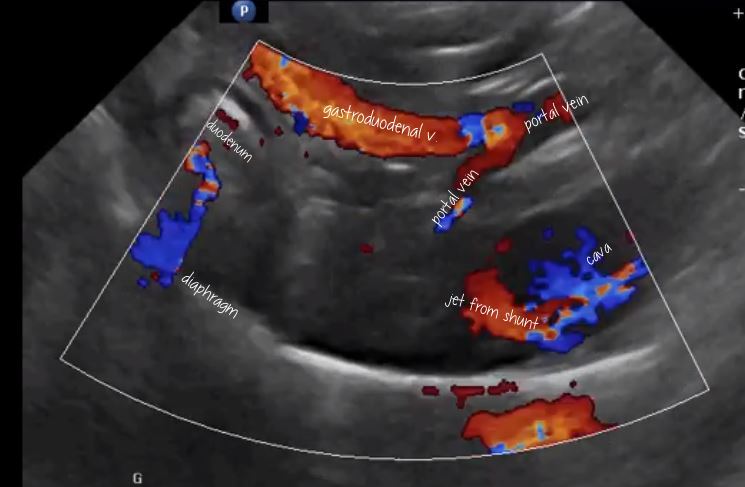
This patient is a five-month-old DSH with a history of ill-thrift and presumed hepatic encephalopathy (episodic hypersalivation, ataxia, blindness, seizures). Interestingly, her fasting bile acids were unremarkable. However, on abdominal ultrasonography there are all kinds of shenanigans: First off, the left side of the liver contains a bizarre, aneurysmal dilation of the vasculature which communicates … Continue reading
Post-surgical neurological complications of portosystemic shunt surgery in cats and dogs: prevention and management
Post-ligation neurological syndrome (PLNS) remains a major frustration. It’s gratifying that we are increasingly able to diagnose and close shunts but equally heart-breaking when everything goes pear-shaped post-op. The spectre of a horrible week of distressing, potentially very expensive and frequently-fatal seizuring in intensive care complicates the whole decision-making process. There’s an obvious need to … Continue reading
Portal vein anatomy in cats and dogs
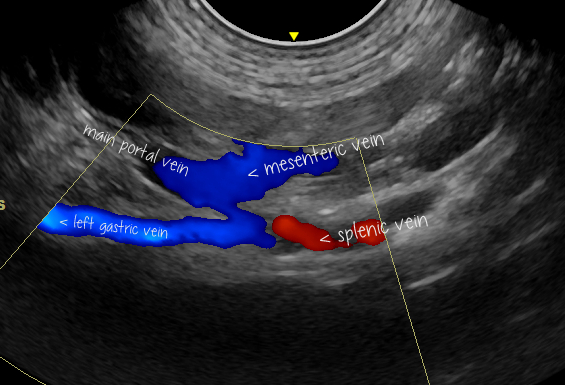
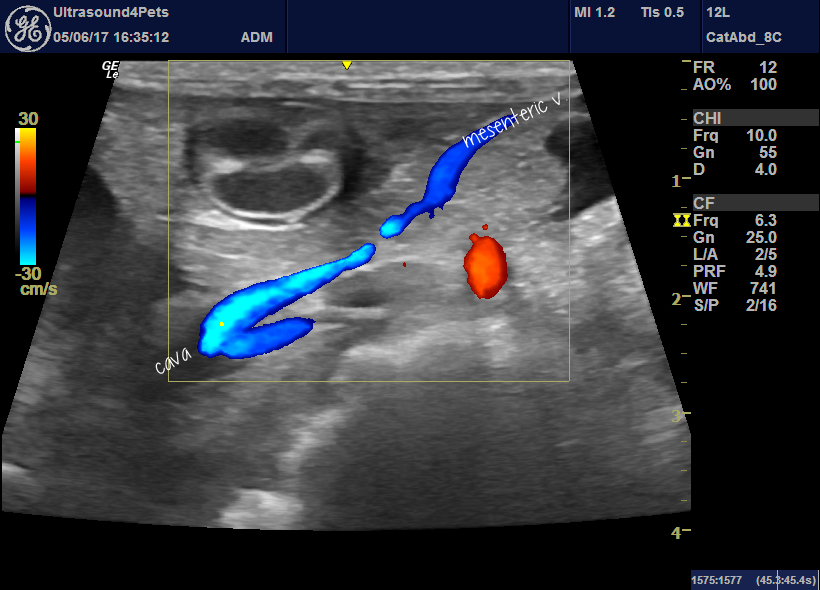
Just a little note with a couple of things that I’ve not seen mentioned elsewhere. A standard view of the portal vein as seen in longitudinal plane from the right side has an ‘envelope’ configuration: In all of these images cranial is to the left of picture: In this video you can … Continue reading
Congenital interruption of the portal vein in dogs: extrahepatic portosystemic shunts which are inoperable
In the vast majority of congenital extrahepatic shunts, the portal vein (PV) exists in normal relation to its tributaries and branches but is hypoplastic due to diversion of flow. Just occasionally, one comes across a shunt with complete absence or interruption of the PV. Vet Surg. 1998 May-Jun;27(3):203-15. Congenital interruption of the portal vein and … Continue reading
Copper irides (irises) in cats with shunts
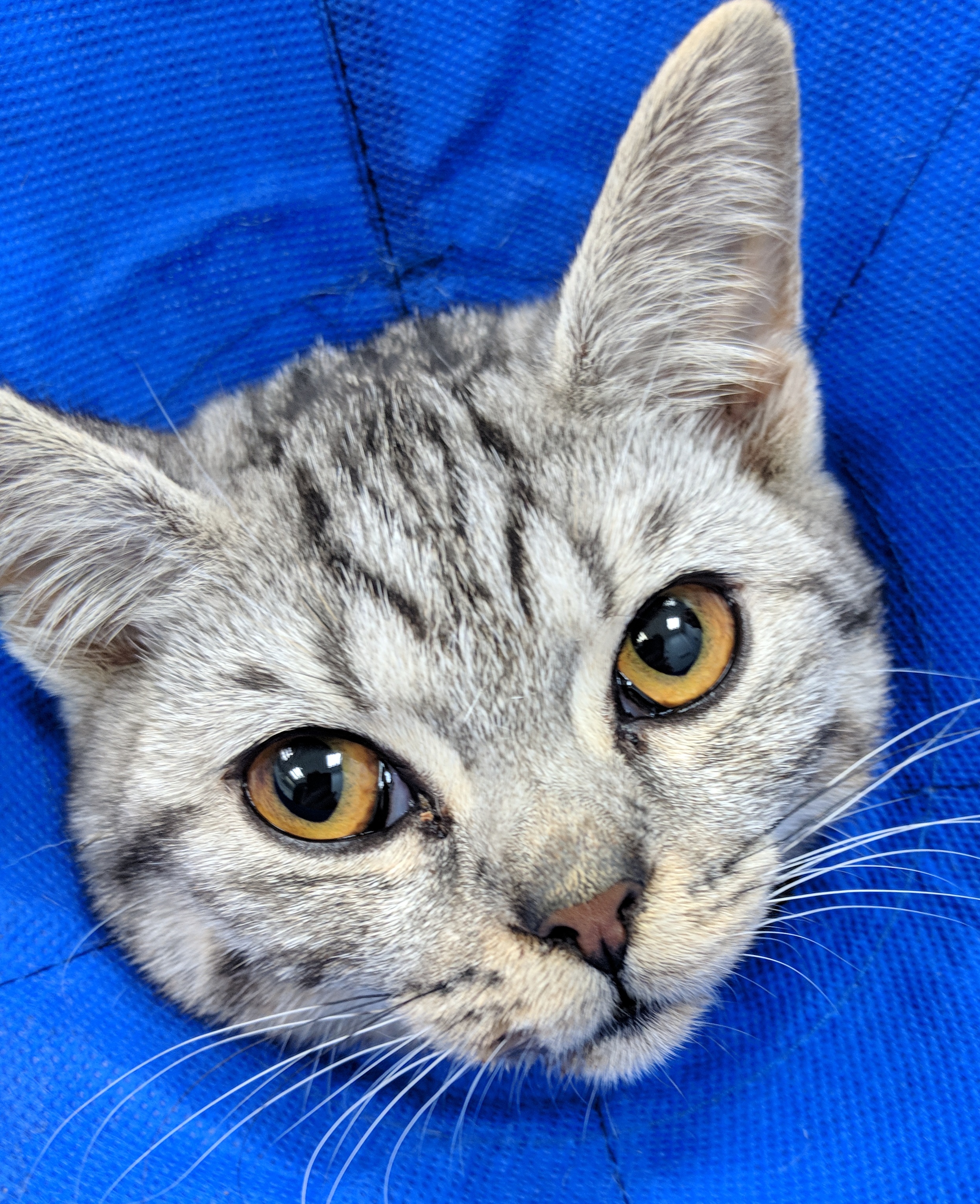
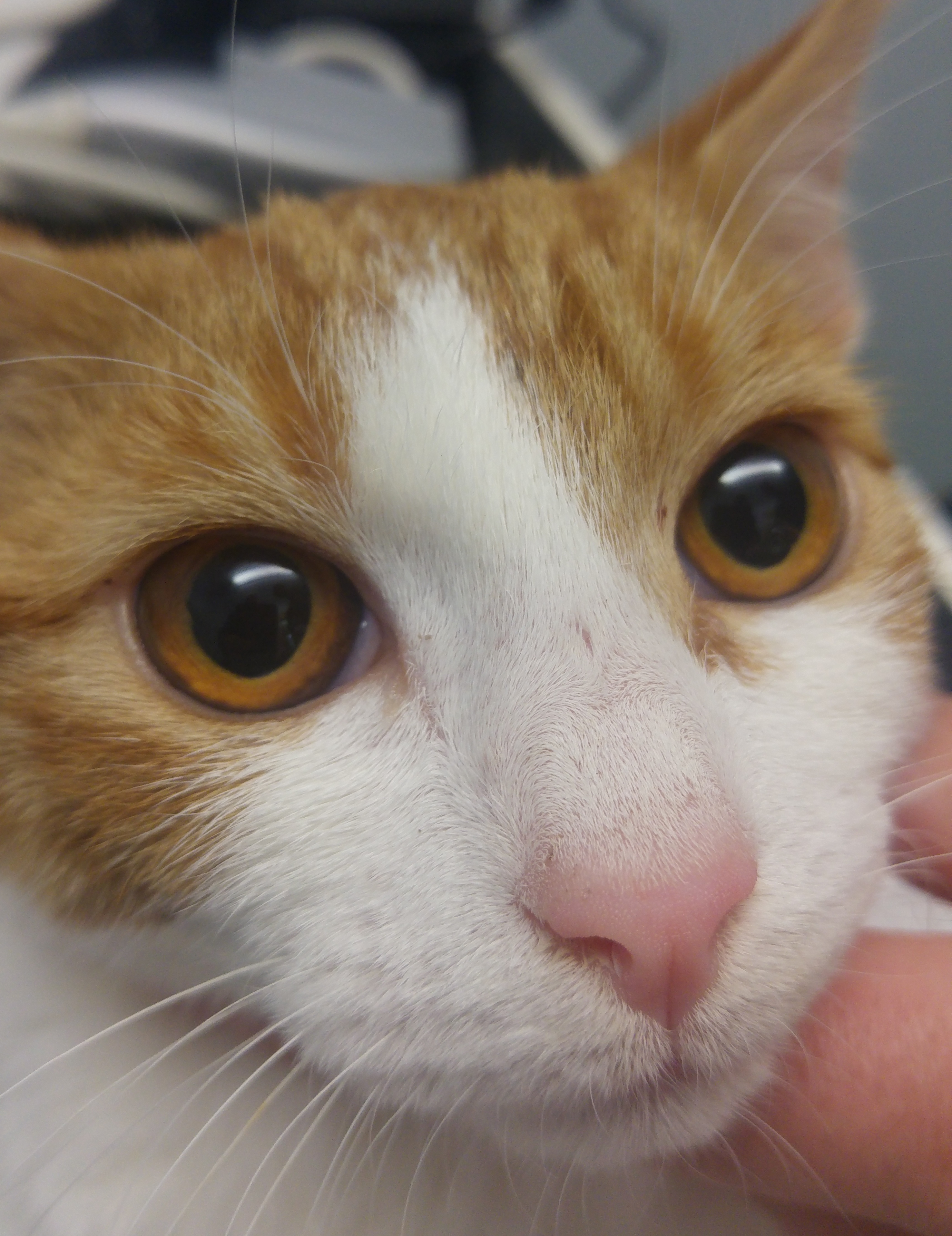
A few photos of cats with the ‘classic’ copper-coloured irides often associated with portosystemic shunts. It was reported to me just recently that at least one of these cats developed the coppering in the period between 3 and 5 months old. …and sometimes they don’t have copper irides: &nbs… Continue reading
Feline portosystemic shunt morphology
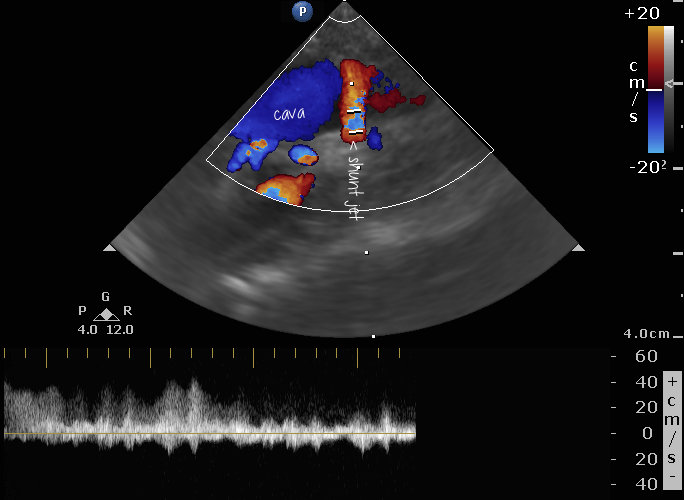
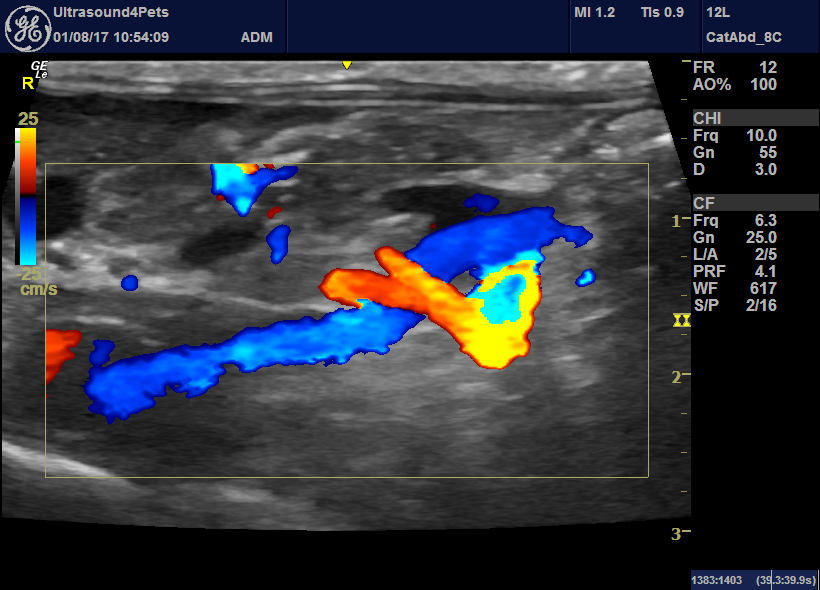
This is just a slightly unusual shunt conformation in a six-month old kitten. As is common, the anomalous vessel originates from the base of the splenic vein and courses cranially and dorsally. The slightly unusual thing is that the confluence with the cava is intra-hepatic. With colour Doppler (clip starts with cava (above) … Continue reading
Portosystemic shunts : to operate or not to operate?
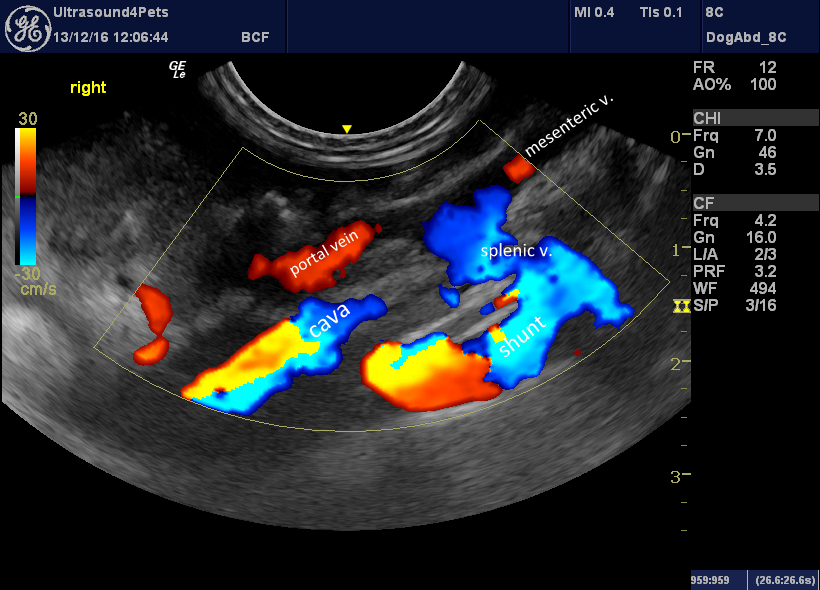
It does sometimes feel as though shunt-ology could be a discipline in its own right: they seem to occupy an enormous part of our time and just when you think you know everything there is to know about shunts there’s another layer of complexity around the corner. A fundamental and thorny issue is the matter … Continue reading
- 1
- 2


